Showing posts with label philosophy. Show all posts

Wednesday, May 27, 2015

"But the problem with thinking of Mars as a fallback planet (besides the lack of oxygen and air pressure and food and liquid water) is that it overlooks the obvious."

"Wherever we go, we�ll take ourselves with us. Either we�re capable of dealing with the challenges posed by our own intelligence or we�re not. Perhaps the reason we haven�t met any alien beings is that those which survive aren�t the type to go zipping around the galaxy. Maybe they�ve stayed quietly at home, tending their own gardens."

From "Project Exodus/What�s behind the dream of colonizing Mars?" by Elizabeth Kolbert in The New Yorker (which I believe is available even to nonsubscribers).

I'm reading that because I read The New Yorker, but by coincidence, I'd just been rereading old Dan Quayle quotes. (Because yesterday, it became necessary to remind you: "What a waste it is to lose one's mind, or not to have a mind is being very wasteful, how true that is.") And I loved this one:
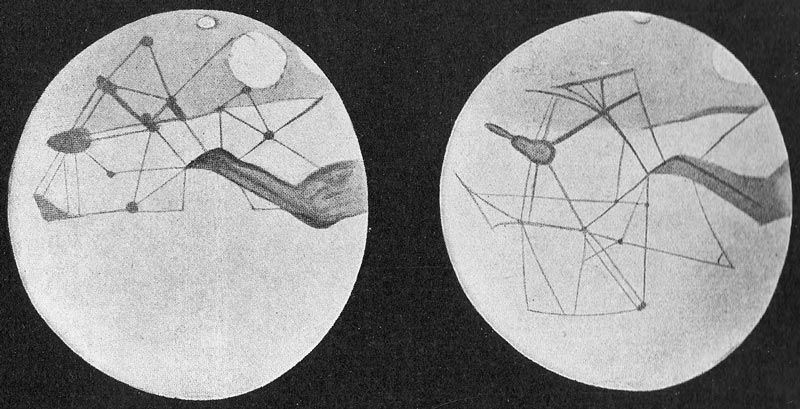
"Mars is essentially in the same orbit . . . Mars is somewhat the same distance from the Sun, which is very important. We have seen pictures where there are canals, we believe, and water. If there is water, that means there is oxygen. If oxygen, that means we can breathe."
Remember the Mars canals?


Almost as entrancing at The Man in the Moon:



But to get back to the garden � and to The New Yorker � here's a March 2007 piece by Adam Gopnik titled "Voltaire's Garden":
Voltaire goes on to detail the hideous theatrics of the Inquisition: the yellow robes, the burnings and flogging set to Church music, the whole choreography of Christian cruelty. The point of �Candide� is that the rapes and disembowelments, the enslavement and the beatings are not part of some larger plan, not a fact of the fatality of life and the universe, but fiendish tortures thought up by fanatics....

By �garden� Voltaire meant... the better place we build by love. The force of that last great injunction, �We must cultivate our garden,� is that our responsibility is local, and concentrated on immediate action... The horror that Voltaire wanted crushed, cruelty in the name of God and civilization, was a specific and contingent thing... The villains are the villains: Jesuits and Inquisitors and English judges and Muslim clerics and fanatics of all kinds. If they went away, life would be much better. He knew that the flood would get your garden no matter what you did; but you could at least try to keep the priests and the policemen off the grass. It wasn�t enough, but it was something.

Tuesday, April 14, 2015

"Hi, Juan. What is 'a knowledgeable road'?"

I respond, at 6:03 a.m., to a commenter who stopped by yesterday at a post I wrote in August 2013 called "The philosophy of travel... the psychology of travel..."
Was this a squandered topic by a terrible thinker and writer? Did this post make any sense with its never ending questions? Did the tone of the writer make you want to jump off a bridge for being so condescending and close-minded? Did you once think "I never want to travel with this person. She has got to be biggest killjoy. She probably likes Olive Garden."? Could I have been better served asking a child, who probably has a better sense of travel and basic writing skills? Does this person think very highly of herself because she asks rather meaningless questions instead of leading her readers down a knowledgeable road? Again, she's probably the worst travel buddy, right?

Wednesday, April 8, 2015

"So stupid. Giving up your own life and your baby's for a fantasy. Guess she earned a Darwin award."/"Go Darwin."

Comments at the Washington Post on an article about a woman who, as a Jehovah's Witness, refused to accept a blood transfusion, and suffered the loss of her unborn child and then the loss of her own life.

Another commenter wrote: "I hope the death certificate read suicide and murder! Stupid, superstitious people! Darwin award for sure..."

And here's WaPo:
The baby died while still in the womb, and the woman then delivered it vaginally...

�Refusal of a lifesaving intervention by an informed patient is generally well respected, but the rights of a mother to refuse such interventions on behalf of her fetus [sic] is more controversial,� [doctors at the Prince of Wales Hospital in Australia wrote in a letter published this month in the Internal Medicine Journal]. �A doctor indeed has moral obligations to both the pregnant woman, and perhaps with differing priority to the unborn fetus [sic].�
Why did the WaPo columnist � By Elahe Izadi� or WaPo editor put "[sic]" after "fetus"? The child died in utero. It seems as though somebody wants to get some distance between abortion rights and religious freedom rights. But that separation is not justified. Abortion rights � in America anyway � are premised on the woman's right to form her own beliefs:
At the heart of liberty is the right to define one's own concept of existence, of meaning, of the universe, and of the mystery of human life. Beliefs about these matters could not define the attributes of personhood were they formed under compulsion of the State.
That's religion. Face it. Should a woman's concept of the universe dominate over the life of the unborn child or not?

Friday, April 3, 2015

"I have kind of flashes in my mind and I try to put them on paper. Thinking? No. That is too serious."

Says the fashion designer Karl Lagerfeld, who does not go out:
I imagine the world from my window. I�m happy wherever I am. I�m very happy to be in the Mercer right now because I bring myself with me wherever I go, thank God. Traveling, I think it�s a nightmare today. The airports and things the people in the street with the selfies � I like to stay at home and read.

What are you reading?

I will not talk about that. I like to read biographies, history, philosophical things like this. But it�s for my private use, and not for making people say, Oh, how clever this stupid man is. I don�t make intellectual conversation. I�m very superficial. I�m just a fashion designer. Fashion designers look at fashion magazines, right?
I'm quite amused by his form of expression. Short sentences that tease. Is he brilliant or an idiot? It's one thing I loved about Andy Warhol. You should read the whole interview, especially if you're into cats. Lagerfeld is quite devoted to one cat. That made me wonder whether Andy Warhol was attached to cats, and I see he put out a limited-edition book called "25 Cats Name Sam and One Blue Pussy." 
[T]here is no text in the book. The calligraphy for the book was done by Julia Warhola, Warhol's mother.... Warhol's mother left the letter "d" off of the word "Name" in the title and Warhol kept the error in, as he liked the random imperfections which appeared in his creations resulting from the techniques he used. Both Warhol and his mother had a passion for cats and they were all named Sam except for one called Hester....
Anyway, I wanted to talk about Lagerfeld's statement "I�m happy wherever I am.... I bring myself with me wherever I go." It's a sunny variation of the old "Wherever you go, there you are." Here's an old-time-y web page devoted to it: "Where have you seen or heard the quote 'No matter where you go, there you are'?" The challenge is to find a source before the iteration in the movie "Buckaroo Banzai."

Some people think their own dad started it. Many others cite Confucius. Remember when everything used to be attributed to Confucius? I think that habit was broken when it became socially unacceptable to begin the attribution with "Confucius say" � that is, leaving the letter "s" off the word "say," not as a random imperfection in the manner of Andy's mother, but following a deeply embedded convention about how to represent Chinese in English.

Somebody finds it in the 15th century devotional work by Thomas a Kempis, "The Imitation of Christ":
"So, the cross is always ready and waits for you everywhere. You cannot escape it no matter where you run, for wherever you go you are burdened with yourself. Wherever you go, there you are."
Maybe "Imitation of Christ" one of those "philosophical things" Karl Lagerfeld is reading, cat Choupette on his lap, in the Mercer Hotel. Or is he, because he is a fashion designer, reading fashion magazines? Did you know Imitation of Christ is a fashion label?

Sunday, March 29, 2015

"In 1998, the philosophers Andy Clark and David Chalmers introduced the idea of 'the extended mind'..."

"... arguing that it makes no sense to define cognition as an activity bounded by the human skull. Humans are masters of mental outsourcing: we archive ideas on paper, we let Google Maps guide us home, and we enlist a spouse to remember where our wallet is," writes Daniel Zalewski in a New Yorker article about an artist, Lonni Sue Johnson, who has suffered from from amnesia ever since, in 2007, viral encephalitis "essentially obliterated her hippocampus."

Her "extended mind" includes: 1. a tote bag full of various notes and maps, and 2. her sister Aline (whose "account of her life [she trusts] as strongly as she used to trust her own memory"). Johnson has a terrible impairment, but reading about her impairments, we see things that are true about ourselves. We may feel that our mind is entirely inside our heads, but the people and things that surround us function enmeshed with our memory. I was especially struck by this paragraph:
Johnson was wearing a magenta turtleneck with black sweatpants and plastic Mardi Gras necklaces. (An amnesiac cannot be trusted with gold.) She had worn the same outfit to the Princeton lab. Some of her favorite clothes are growing threadbare, but it�s difficult to replace them, because she doesn�t accept new clothes as hers.
She doesn�t accept new clothes as hers... We're not that impaired. New things can become ours. But I know the feeling. It's something like what George Carlin was talking about in his delightful monologue "Stuff":


"That's all your house is - a place to keep your stuff. If you didn't have so much stuff, you wouldn't need a house. You could just walk around all the time. A house is just a pile of stuff with a cover on it." But that's your extended mind, too.

"Sometimes you leave your house to go on vacation. And you gotta take some of your stuff with you. Gotta take about two big suitcases full of stuff, when you go on vacation. You gotta take a smaller version of your house." Well, of course, you're going to need your mind.

"You get over to your friend's house... and he gives you a little place to sleep, a little bed right next to his windowsill or something... You put your stuff up there. You got your Visine, you got your nail clippers, and you put everything up. It takes about an hour and a half, but after a while you finally feel okay, say, 'All right, I got my nail clippers, I must be okay.'"

What things (and people) do you accept as yours? How are they part of what makes feel okay... makes you remember who you are and what you are doing here?

Wednesday, March 18, 2015

"It seems to me that people are first choosing a mood or attitude, and then finding the disparate views which match to that mood and, to themselves, justifying those views by the mood."

"I call this the 'fallacy of mood affiliation,' and it is one of the most underreported fallacies in human reasoning.  (In the context of economic growth debates, the underlying mood is often 'optimism' or 'pessimism' per se and then a bunch of ought-to-be-independent views fall out from the chosen mood.)"

Tyler Cowen wrote back in 2011. I'm reading that today � strangely early in the morning � because yesterday, the commenter HoodlumDoodlum said: "Professor Althouse: It sounds like what you're describing is what Tyler Cowen calls the fallacy of mood affiliation."

Was I saying the same thing? Not exactly, but there is some resemblance. Cowen's idea is that people � for some reason (I don't see him exploring why) � have a preference for the way they want to feel, and then they pick the ideas that give them that feeling. I'm saying people have a preference for feeling comfortable in the social environment where they find themselves and so they affect or adopt the ideas that are shared by others around them. That is, I'm specifying one preferred feeling � social comfort � and ascribing it to nearly everyone. And I'm saying that the ideas that follow on are simply the group's shared ideas. I was talking about how ordinary people haven't thought through these ideas and don't want to. The ideas didn't arise within their minds at all. What came from them is the desire to be liked and loved and included. Cowen's fallacious thinker is generating the ideas from within, but the generation process is influenced by the feelings the thinker desires.

"Good prose always strives to be clear and direct. Or so we all think now."

"Arthur Melzer�s remarkable book shines a floodlight on a topic that has been cloaked in obscurity: esoteric writing. Using such techniques as deliberate contradiction, parable and allusion, authors who write esoterically craft texts so that they operate on two levels. There is a surface message intended for the ordinary or inattentive reader and a deeper meaning, often diametrically opposed to the first, that is addressed to the discerning reader.... The great problem this posed for classic philosophers was that, in their view, all societies, even good ones, rested on certain myths or unexamined beliefs, which philosophy, in its relentless effort to subject everything to question and analysis, threatened.... Esoteric writing replicates on the written page what the good teacher does through discussion, which is to drop hints and start the student on a path of independent inquiry. By this view, dotting every i and crossing every t is an impediment. 'The open society,' Mr. Melzer writes, 'is highly sensitive to the dangers of obscurity but blind to those of plainness and clarity.'"

From a review in the WSJ by James Ceaser of Arthur M. Melzer's "Philosophy Between the Lines."

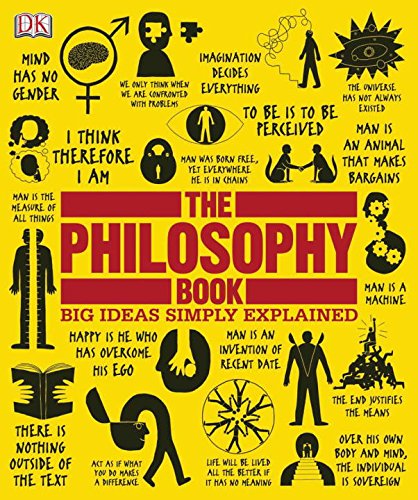
I like the way Amazon reacted to my search for that book with the suggestion that I might also want "The Philosophy Book (Big Ideas Simply Explained)."


That isn't perverse, actually. It makes a lot of sense. And I'm saying that to set you on the path of independent inquiry.