"Arthur Melzer�s remarkable book shines a floodlight on a topic that has been cloaked in obscurity: esoteric writing. Using such techniques as deliberate contradiction, parable and allusion, authors who write esoterically craft texts so that they operate on two levels. There is a surface message intended for the ordinary or inattentive reader and a deeper meaning, often diametrically opposed to the first, that is addressed to the discerning reader.... The great problem this posed for classic philosophers was that, in their view, all societies, even good ones, rested on certain myths or unexamined beliefs, which philosophy, in its relentless effort to subject everything to question and analysis, threatened.... Esoteric writing replicates on the written page what the good teacher does through discussion, which is to drop hints and start the student on a path of independent inquiry. By this view, dotting every i and crossing every t is an impediment. 'The open society,' Mr. Melzer writes, 'is highly sensitive to the dangers of obscurity but blind to those of plainness and clarity.'"
From
a review in the WSJ by James Ceaser of Arthur M. Melzer's
"Philosophy Between the Lines."I like the way Amazon reacted to my search for that book with the suggestion that I might also want
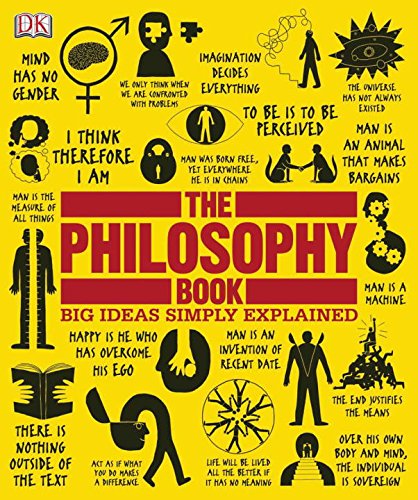
"The Philosophy Book (Big Ideas Simply Explained)." 
That isn't perverse, actually. It makes a lot of sense. And I'm saying that to set you on the path of independent inquiry.

No comments:
Post a Comment